
Brand protection services in India find and remove the fakes that use your brand: phishing and fake KYC pages, lookalike domains, fake customer care numbers, impersonation on social media, cloned apps and counterfeit listings. Choose a provider that monitors continuously, covers Indian languages and platforms, and includes takedowns. Report cases where money was lost yourself at cybercrime.gov.in or on 1930.
This guide is written from TIKAJ’s own monitoring and takedown work for Indian companies. It covers what the abuse looks like, what a service should include, how the main providers differ, and what you can do without a provider.
What brand abuse looks like in India
These are the patterns we see most often in TIKAJ’s monitoring and takedown work for Indian banks, insurers, fintechs, retailers and consumer brands:
- Fake customer care numbers. Scammers add a fake helpline to search results, map listings or social posts, then ask callers to install a screen sharing app or share an OTP.
- Payment and KYC phishing. Pages that copy a bank or wallet login, or a “KYC update” page linked from an SMS, built to collect card details, UPI PINs and OTPs.
- Lookalike domains. Domains that add “-support”, “-kyc” or “-offer” to the brand name, or swap one letter, often registered days before a campaign starts.
- Fake social media pages and ads. Pages in English and regional languages that run giveaways, fake jobs or fake franchise offers, sometimes with paid ads.
- Cloned and rogue apps. APKs shared over WhatsApp and Telegram, or listed on third-party app stores, that copy a real app to steal credentials or SMS.
- Counterfeit listings. Fake products sold on marketplaces and social commerce under the brand’s name and images.
- Leaked data. Customer data or employee credentials offered on Telegram channels and dark web forums.
What a brand protection service should do
A brand protection service has two jobs: find abuse early and get it removed. Monitoring without removal leaves you with a list of problems. Removal without monitoring means you only act on what customers report. Check that any provider covers both:
- Coverage: new domain registrations, websites, social platforms, app stores (including third-party Android stores), marketplaces, paid search and social ads, messaging channels, and the dark web.
- Indian context: regional languages, Indian marketplaces and platforms, and familiarity with Indian fraud patterns like fake KYC and UPI pages.
- Verification: a person or a reliable process that confirms each case, so you do not chase false positives or file reports against legitimate partners.
- Takedown included: whether takedowns are part of the price or billed per case, and whether there is a cap.
- Evidence and reporting: screenshots, timestamps and a case record you can hand to your bank’s fraud team, your auditors or the police.
- Speed and follow-up: how the provider handles hosts that do not respond and attackers who return on a new domain.
Our product: TIKAJ brand protection, powered by Hunto.ai
This is our own service, so read this section with that in mind. It fits one use case well: Indian banks, fintechs, insurers and consumer brands that need fakes removed quickly, not just reported.
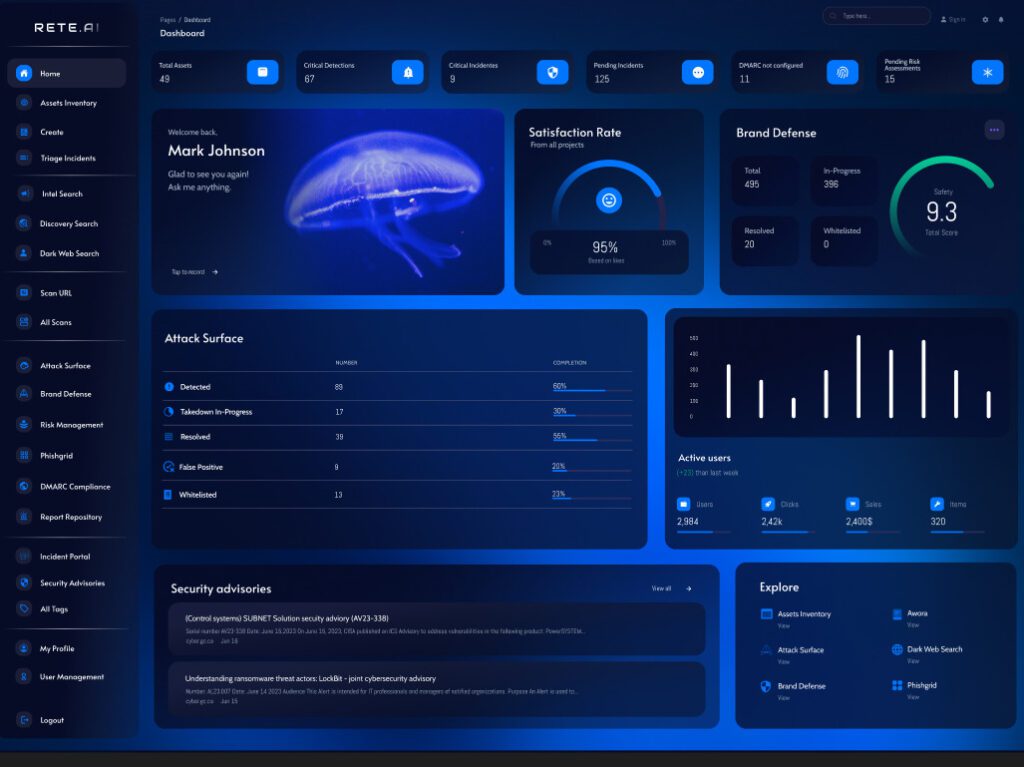
- What it covers: phishing sites, lookalike domains, fake social media pages, rogue apps, marketplace fraud and dark web leaks, with takedowns handled by our team. TIKAJ and Hunto handle 100,000+ takedowns a year for 150+ enterprise customers.
- India fit: an Indian team that works in regional languages, knows Indian fraud patterns (fake KYC, UPI and customer care scams), and maps evidence to RBI and SEBI expectations.
- Limitations: no published price and no self-serve trial; plans are annual and quoted after a demo. It is not a counterfeit inspection or physical authentication service.
- More: brand monitoring services and our takedown service.
Brand protection providers compared
We checked every provider below on its own website on 6 October 2026. None publishes a list price, so pricing is quote-based throughout; where a vendor states how it charges for takedowns, we say so. “India presence” means only what the vendor itself states.
| Provider | Main focus | Takedowns | How it prices | India presence (vendor-stated) |
|---|---|---|---|---|
| CloudSEK | Fake domains, phishing, fake customer care numbers, rogue apps | In-house takedown team | Quote-based | Indian-origin company |
| Group-IB Digital Risk Protection | Phishing, scams, impersonation | Unlimited on managed plans | Quote-based, by modules, brands and languages | Lists customers in India |
| Brand Monitor (brand-monitor.com) | Marketplaces, counterfeits, offline enforcement | Yes | Quote-based | Indian private limited company |
| BrandShield | Phishing, social scams, marketplaces, rogue apps | In-house enforcement team | Quote-based | None stated |
| ZeroFox | Social, domains, dark web, executive protection | Capped per bundle (250 to 1,000 a year) | Quote-based bundles | None stated |
| Netcraft | Phishing, scams, fraud sites | Core service | Quote-based | None stated |
| Bolster | Fake sites, social scams, fraudulent ads, marketplaces | Automated | Quote-based | None stated |
| Fortra Brand Protection (formerly PhishLabs) | Domains, social, executive, counterfeit, apps | Yes, with browser blocking | Quote-based | None stated |
| Red Points | Marketplace counterfeits, piracy, impersonation | Unlimited | Flat fee by scope | None stated |
| Smart Protection | Counterfeits, piracy, marketplaces, ads | Unlimited | Flat fee by markets and products | None stated |
| Corsearch | Trademark intelligence plus counterfeits and piracy | Yes | Quote-based | None stated |
| Memcyco | Real-time detection of customers visiting fake bank sites | Yes | Quote-based | None stated |
Providers focused on phishing and impersonation
CloudSEK is an Indian-origin company. Its brand monitoring covers phishing sites, fake domains, fake customer care numbers and rogue mobile apps, and its own team manages takedowns from submission to confirmation. Its platform has grown towards attack surface and threat intelligence, so check how much of a contract goes to brand protection.
Group-IB Digital Risk Protection runs a self-service domain feed and two managed plans, with unlimited takedowns on the managed plans and work in any language. Group-IB lists India among its customer countries.
BrandShield covers domains, phishing, social media scams, executive impersonation, marketplaces, rogue apps and the dark web, and removes them with its own enforcement team.
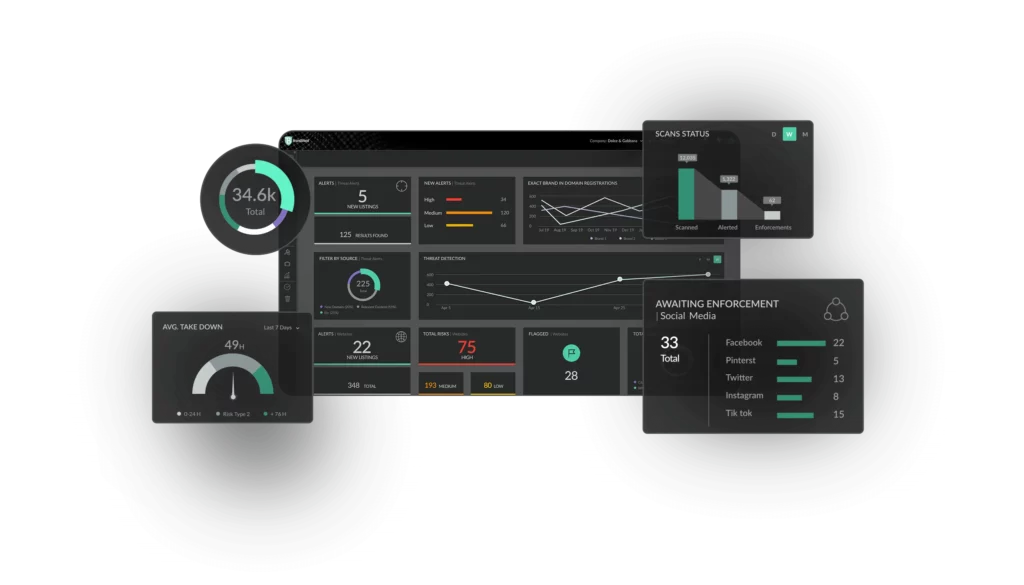
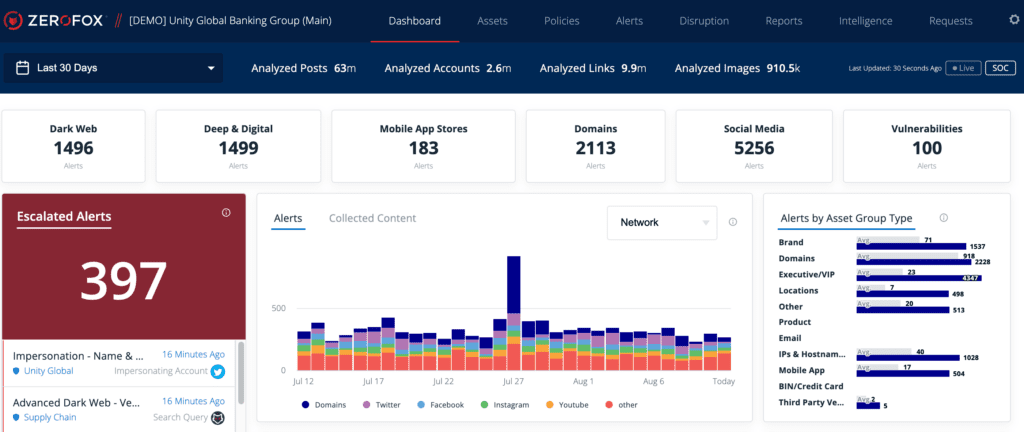
ZeroFox is a broad external threat platform with takedowns metered per year: its Foundation bundle lists 250, Premium 1,000. It suits large enterprises that also want threat intelligence and executive protection.
Netcraft is a UK company best known for phishing site detection and takedown, which it describes as its core service. It also runs a free public URL reporting form.
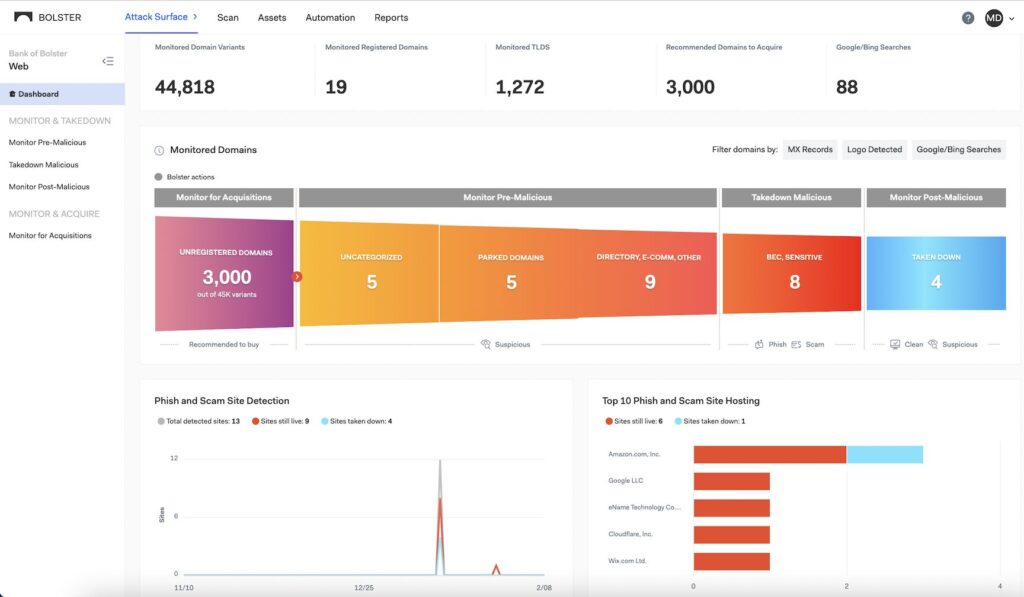
Bolster detects and removes fake sites and social scams, and added marketplace monitoring (May 2026) and fraudulent ad monitoring (July 2026). Its website blocks automated access, so we confirmed these from its press releases and search listings.
Fortra Brand Protection, formerly PhishLabs (bought by HelpSystems, now Fortra, in 2021), covers domains, social media, executives, counterfeits and mobile apps, with a takedown network and browser blocking.
Memcyco takes a different approach for banks: it detects in real time when customers land on a fake copy of the bank’s site and feeds decoy data into the fake forms, alongside takedowns. It is built for account takeover fraud, not counterfeits.
Providers focused on marketplaces and counterfeits
Red Points and Smart Protection both sell flat-fee plans with unlimited takedowns, priced by scope (brands, markets, products), and focus on counterfeit listings, piracy and impersonation on marketplaces and social media. Neither states an Indian presence, so ask about Indian marketplaces and social commerce before signing.
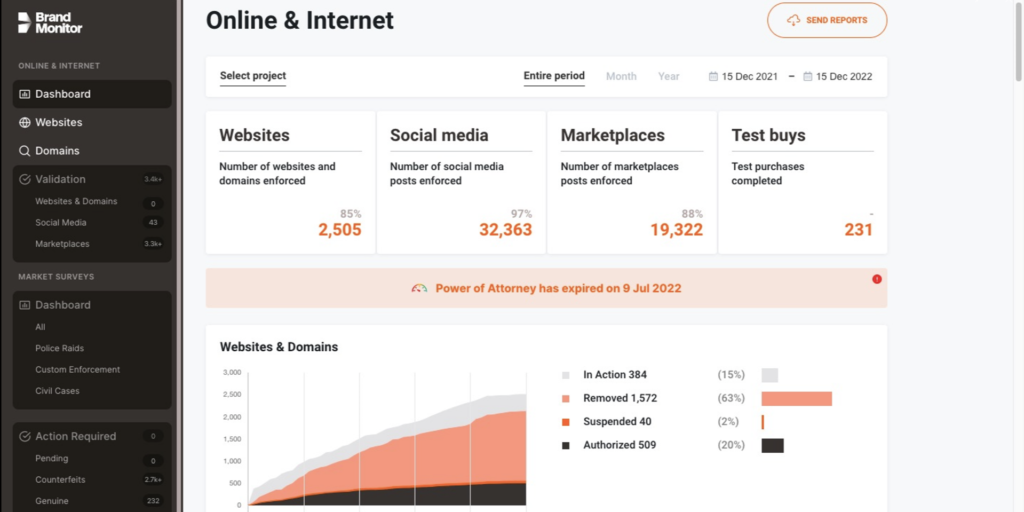
Brand Monitor (brand-monitor.com, not brandmonitor.com, which is a parked domain) combines online marketplace monitoring with offline enforcement such as mystery shopping and customs registration, and has an Indian private limited company.
Corsearch links trademark search and watching with brand protection against counterfeits, piracy and impersonation, which suits companies whose legal team already manages a large trademark portfolio.
Physical product authentication
If your problem is counterfeit goods in shops rather than fakes online, you need security labels and track and trace as well. Crane Authentication (OpSec Security was acquired by Crane NXT in 2024 and now trades under this name) and KURZ SCRIBOS (SCRIBOS GmbH, a KURZ company) sell physical markings, labels and authentication platforms. They are not substitutes for online takedowns.
Report it yourself: Indian channels
You do not need a provider to act on a single case. These are the official channels we use alongside platform reports:
- cybercrime.gov.in and the 1930 helpline: for any case where customers lost money, and to report suspect website URLs, phone numbers, WhatsApp and Telegram handles. Call 1930 quickly, because the helpline works with banks to try to stop the money trail.
- CERT-In: report phishing, fake apps and website compromise to incident@cert-in.org.in. Under CERT-In’s April 2022 directions, service providers, intermediaries, body corporates and government organisations must report listed incidents, including phishing and fake mobile apps, within six hours of noticing them.
- Sanchar Saathi Chakshu: report fraud calls, SMS and WhatsApp messages that impersonate your brand.
- RBI Sachet: for entities illegally taking deposits or posing as regulated lenders.
- INDRP: NIXI’s dispute policy for .in domains that are confusingly similar to your mark, held without a legitimate interest and used in bad faith. It can cancel or transfer the domain.
- Platform grievance officers: under the IT Rules as amended in February 2026, every platform must publish a grievance officer, who must acknowledge a complaint within 24 hours and resolve it within seven days.
For hosts, registrars, browsers and app stores, follow our step-by-step guide on how to get a website taken down, which includes a complaint template.
How to choose a provider
Ask every shortlisted provider these questions, and ask for answers in writing:
- Which channels do you monitor in India? Ask specifically about regional language social media, Telegram, third-party Android app stores, Indian marketplaces and fake customer care numbers in search and map results.
- Are takedowns included, and is there a cap? Some providers include unlimited takedowns, others cap them per year or bill per case.
- Who confirms a case before a takedown is filed? False takedowns against partners or resellers cause their own problems.
- What evidence do we get? You need screenshots, timestamps and case records you can give to your fraud team, auditors or the police.
- What happens when a host does not respond? Ask how they escalate to registrars, registries and platforms, and how they catch repeat attackers.
- Can we run a pilot on our own brand? A two to four week pilot on your real brand shows more than any demo.
For a wider comparison of monitoring tools, including social listening products, see our guide to brand monitoring tools.
FAQ
What do brand protection services in India cover?
They monitor for misuse of your brand online and remove it. That usually means phishing and fake KYC pages, lookalike domains, fake customer care numbers, impersonation on social media, cloned and rogue apps, counterfeit listings on marketplaces, and leaked data on Telegram or the dark web. Good providers include takedowns and give you evidence for each case.
How much do brand protection services cost in India?
None of the providers we checked publishes a list price; all quote after a demo. Pricing usually depends on the number of brands, domains, channels and languages, and on how takedowns are counted. Some include unlimited takedowns for a flat fee, while others cap takedowns per year. Ask for a pilot on your own brand before signing an annual contract.
Where do I report a fake website of my brand in India?
Send abuse reports to the site’s host and registrar, and report it to Google Safe Browsing so browsers warn visitors. If customers lost money, file at cybercrime.gov.in or call 1930. Organisations can report phishing to CERT-In at incident@cert-in.org.in. For a .in lookalike domain, the INDRP process can cancel or transfer it to you.
Is brand protection the same as trademark registration?
No. A registered trademark gives you the legal right to stop others using your mark, and it makes takedown requests stronger. Brand protection is the ongoing work of finding misuse online and getting it removed. You need both: the registration for legal standing, and monitoring and takedowns to enforce it across websites, apps, social media and marketplaces.